
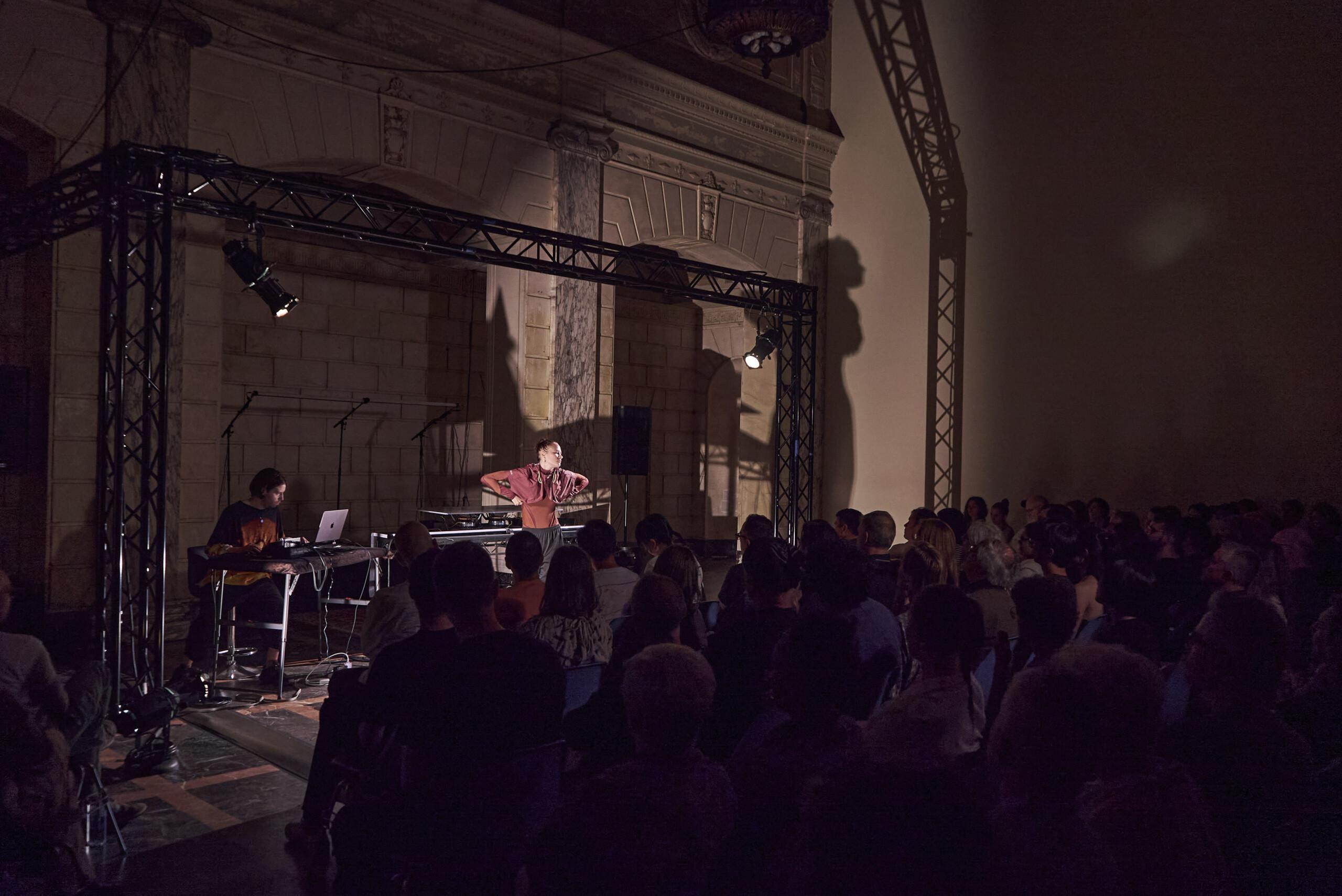
Photo: Cameron Kelly McLeod
In 2025, Frame’s grants enabled 129 international projects of Finnish contemporary art around the world. For our annual report, we asked grantees Biret Haarla Pieski and Hayden Dean to share experiences on their international presentations. Performance duo Aavar, co-created by Biret Haarla Pieski and Hayden Dean, promoted their work at ISSUE Project Room in Brooklyn, New York, in September 2025.
Biret Haarla Pieski and Hayden Dean: We have worked together as the duo Aavar for over three years through various performances, focusing on sound and choreography as a shared artistic language. We work collectively, and our artistic practice often revolves around connection, attentiveness, and the ongoing negotiation between each other’s mediums.
We first became familiar with each other’s artistic practices during the 2022 Venice Biennale, where Biret was performing in a work by Pauliina Feodoroff presented at the Sámi Pavilion, and Hayden was collaborating with Aziz Hazara on a work presented by the Fondazione In Between Art Film. Following this, we collaborated on a performance for an experimental exhibition and festival in Helsinki organised by the Berlin-based collective Focus Group.
The festival centred around experimentation and invited artists to create lightweight performance works for an audience already open to unexpected ideas and processes. We were brought together to develop something collaboratively within a very short timeframe, and there was immediately something in the process that we both enjoyed and wanted to develop further.
From there, we continued working together as a duet with the aim of exploring movement and sound horizontally, without one form dominating the other. We are interested in what can emerge between these areas and try to work outside of fixed stylistic approaches as much as possible. Because of that, each work we develop often begins again from the start, rethinking the relationship between the mediums each time.
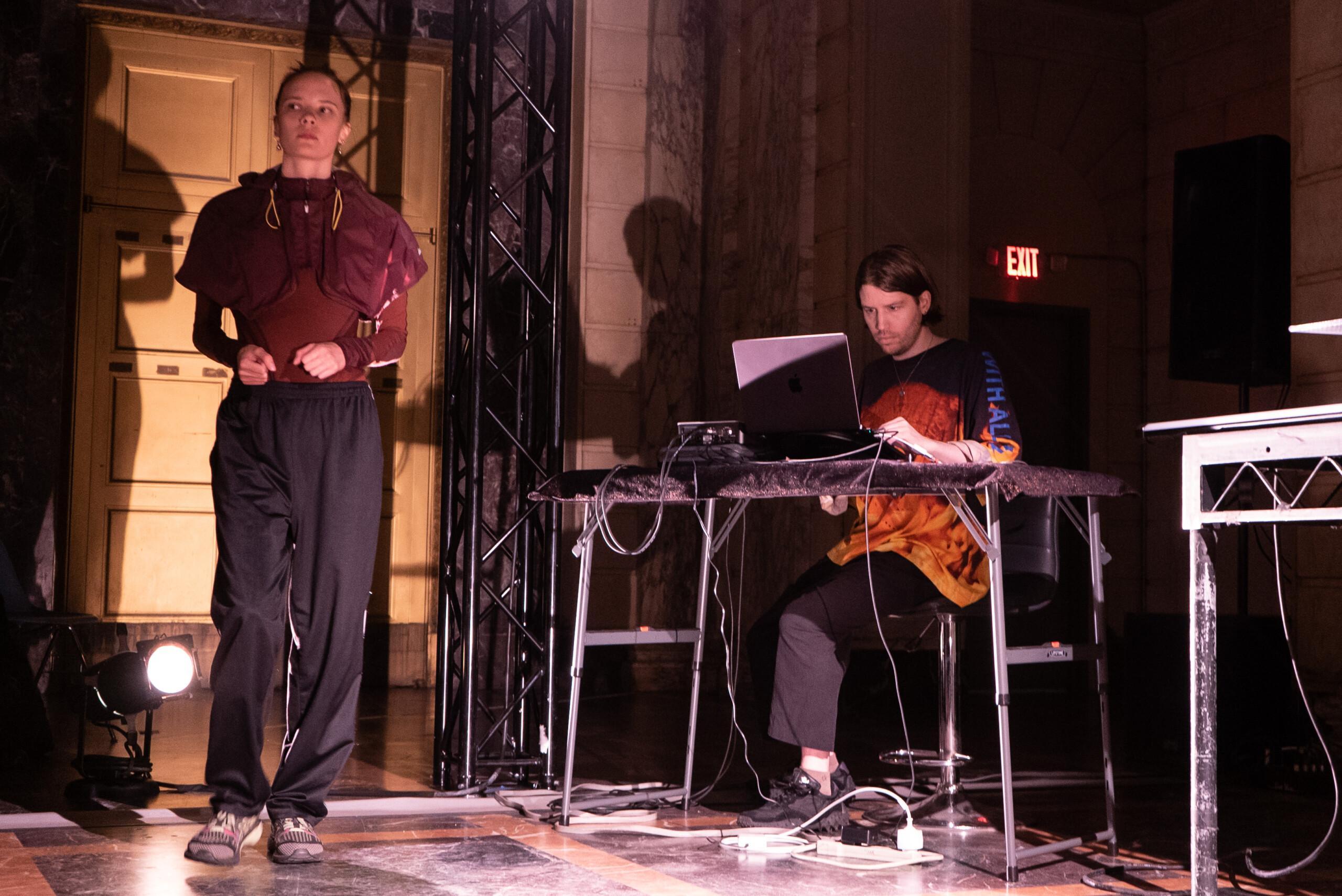
Photo: Cameron Kelly McLeod
Grant created opportunities to build long-term partnerships
The Frame grant enabled a two-week stay in New York in August 2025, where the Executive Director & Chief Curator of ISSUE Project Room, Zev Greenfield, invited us to get to know the local art scene and promote our work. The grant made it possible for us to meet artists, curators, venues, and organisations working across experimental performance practices, while also giving us the opportunity to better understand the wider arts landscape in New York. The trip also coincided with Hayden’s involvement in a research group at Aalto University, which naturally opened additional points of connection and conversations.
The trip created opportunities for meetings, exchanges, and presentations of the work within contexts that would otherwise have been difficult for us to access. It also helped us build meaningful long-term partnerships and created a stronger foundation for future international collaborations.
Our goals were to raise the visibility of our work, make contact with potential future venues and collaborators, and better understand how our work operates within a different artistic context and scene. We also wanted to see how the ideas within the duet would translate into dialogue with other approaches to experimental performance present in New York, which has long held an important historical influence on both of our individual practices.
These goals were absolutely met. We had the opportunity to present and discuss the work with artists, curators, and organisations, while also encountering practices that helped us reflect on our own methods and current viewpoints. The experience gave us a clearer understanding of how our work can exist independently without needing to fit neatly into a single disciplinary framework.
Most importantly, the trip confirmed that there is genuine interest in the kind of experimental work we are making, and gave us confidence in continuing to develop our work further, both individually and as a duo.
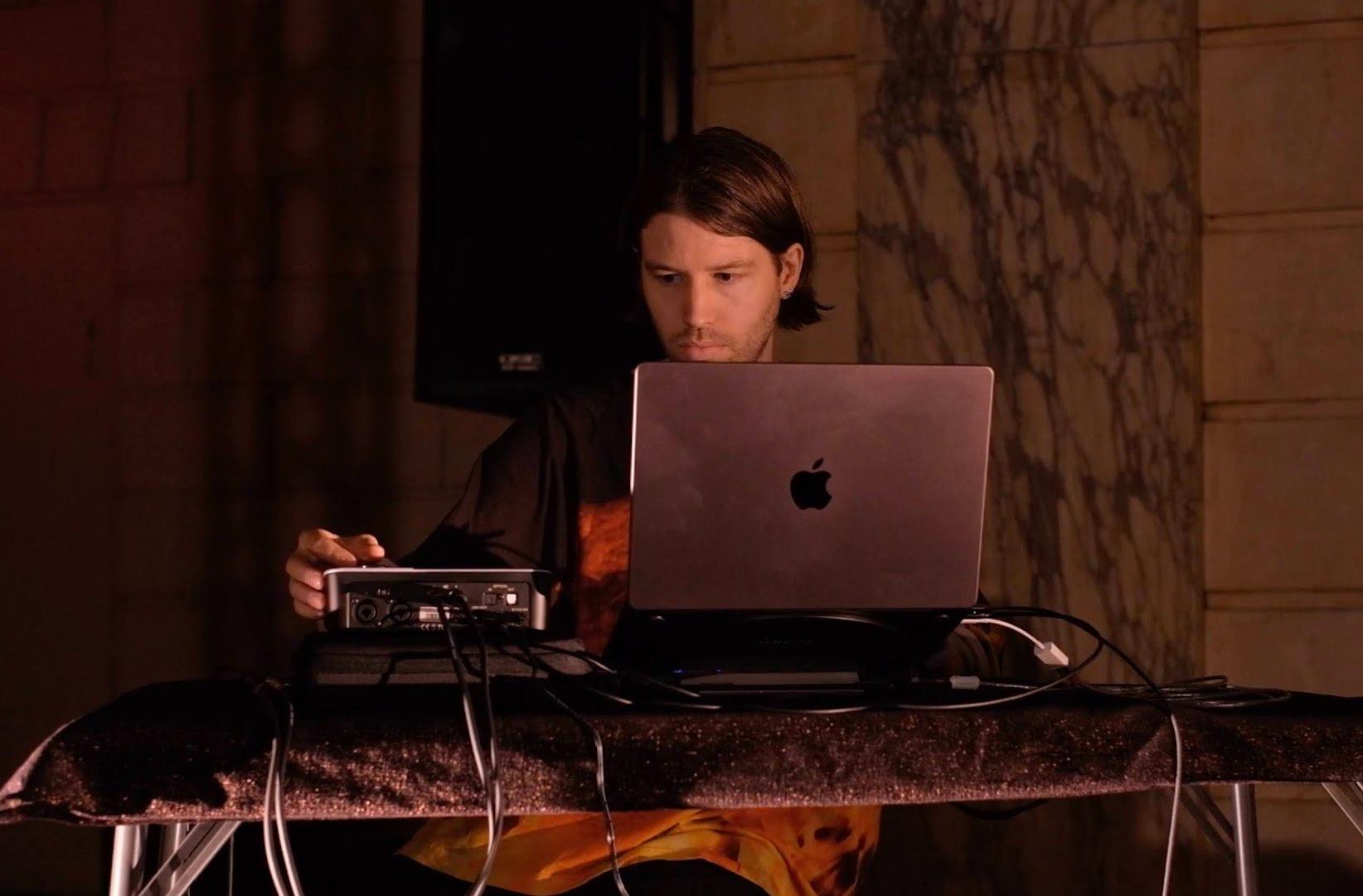
Photo: Yiyang Cao
A new artistic approach emerged from the experience
The project led to contact with venues and organisations that previously felt difficult to access, which widened the possibilities for future international collaboration. We also had the opportunity to meet with the Finnish Consulate and the Finnish Cultural Institute in New York, and established long-term relationships with both institutions.
Because the work exists between fields, it can sometimes be difficult to clearly position within any single one. The trip helped us better understand how our project can move between these different environments, and it was valuable to see that the work could meaningfully connect within several contexts without needing to fully belong to one specific field.
It also had a strong impact on the development of our artistic practice more broadly. During this period, we became increasingly interested in how our separate practices could coexist without hierarchy while still maintaining their own internal structures. Rather than treating sound and movement as distinct disciplines working alongside one another, we have continued exploring how they might function as a shared, unified language.
What emerged from this experience was a new approach that we are now beginning to develop further through our next experiments. The conversations and experiences in New York helped sharpen our thinking around these ideas and opened up directions we had not previously considered.
The project also brought recognition to our work within Europe. For example, Aavar was selected for the Aerowaves platform and included in the Aerowaves Recommends 2026 artist list, which further expanded the international visibility of our duet and opened new possibilities for future collaborations and presentations.
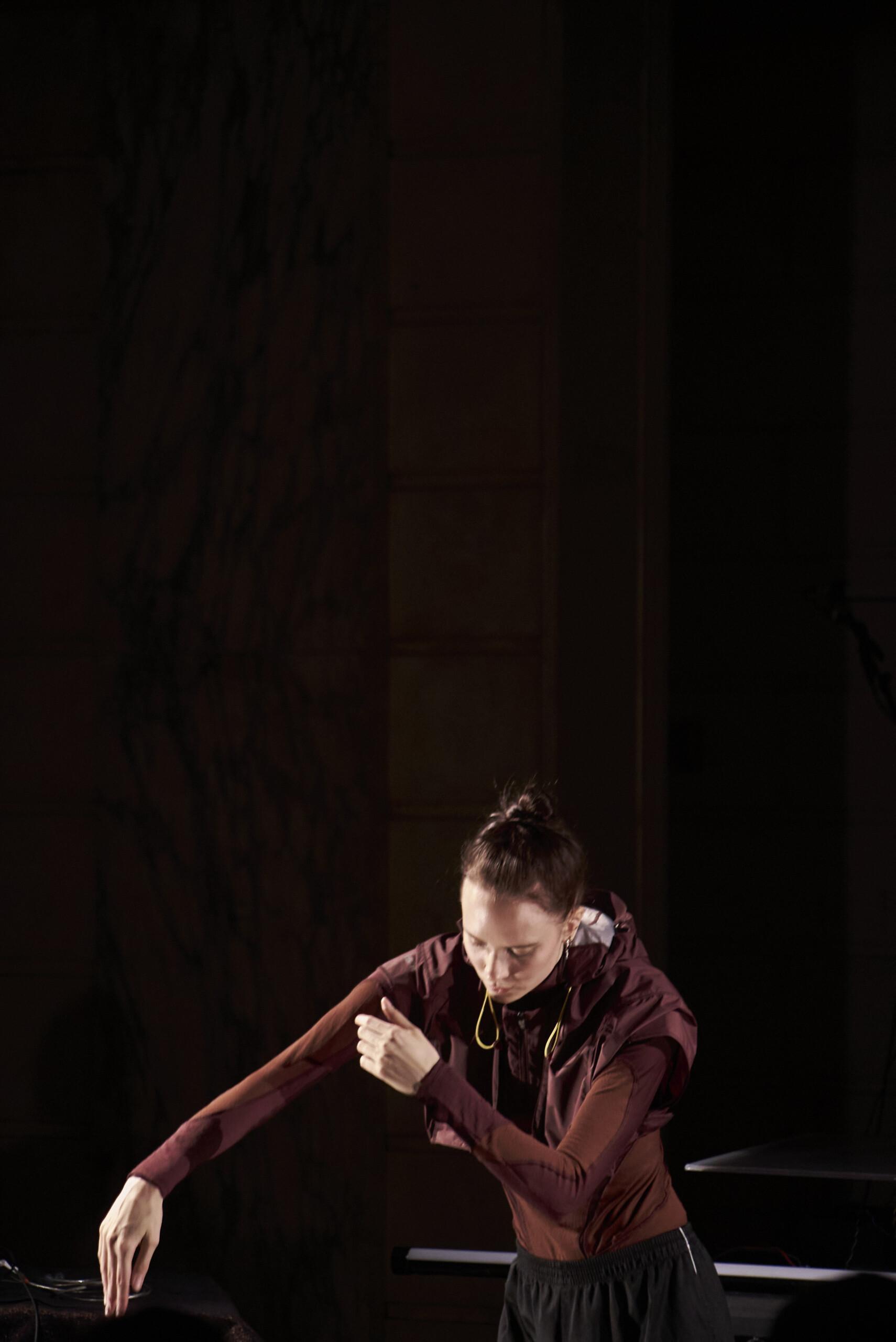
Photo: Cameron Kelly McLeod
Active and long-term exchange could be cultivated by art organisations
Contemporary art organisations could perhaps play a stronger role in creating direct connections between artists, venues, curators, and institutions internationally, while also making support structures and opportunities more transparent and accessible.
It could also be valuable for organisations to stay actively engaged with what artists are currently developing, and to help facilitate connections when meaningful opportunities arise. While it is impossible to follow every artist equally, there is still real potential for organisations to recognise emerging practices and connect them with relevant international contexts.
In this way, artists would not always need to rely so heavily on self-promotion, cold-contacting venues, or constantly directing attention toward themselves. Ideally, artists could focus more fully on developing the work itself, while organisations support meaningful dialogues and long-term relationships around that work.
This could also help move away from the pressure of social media-driven visibility and attention economies, and instead support more sustainable and dialogical artistic exchanges.
Our experience with institutions such as ISSUE Project Room in New York gave us a concrete example of the kind of support that can make international exchange genuinely meaningful for artists. Beyond simply presenting work, they actively tried to create supportive environments in which artists could develop conversations, build relationships, and connect with venues, curators, and other practitioners relevant to their work. What stood out to us in particular was the level of commitment and openness with which they approached experimental practices.
We think there is a lot that institutions in Finland and across Europe could take inspiration from in terms of fostering these kinds of active exchanges, where long-term dialogue and care for artistic development are treated as equally important as presentation itself.
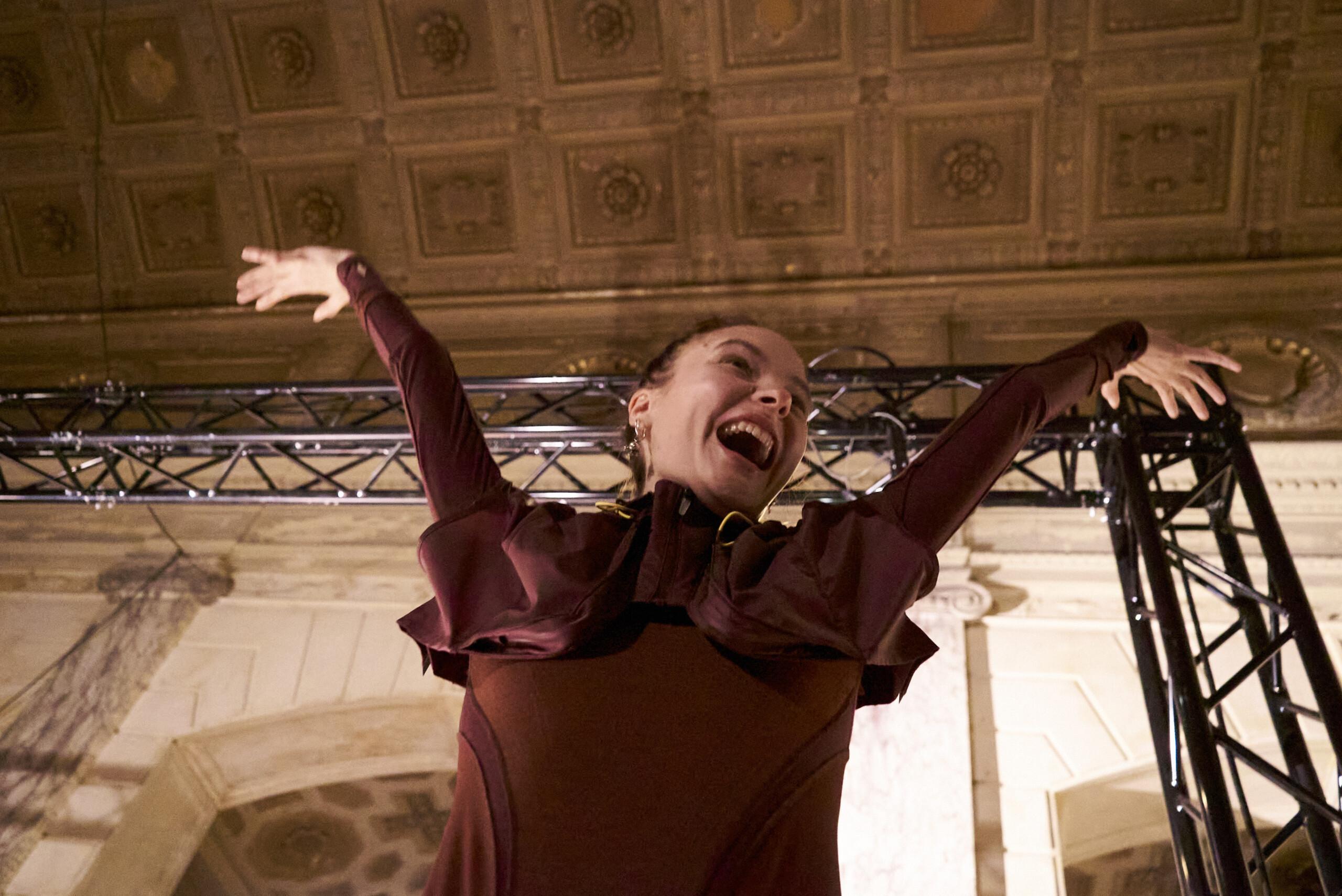
Photo: Cameron Kelly McLeod
Sharing our practice internationally has not only allowed us to see it through a new lens but also helped us better understand our own approaches through exposure to different artistic environments and ways of working. The conversations and exchanges that emerged through the trip became an important influence on the future development of our work, and experiences like this have reinforced for us how valuable organisations such as Frame can be in helping artists access new contexts, relationships, and long-term dialogues around their work, further from home.
We feel there is still great value in continuing to expand these international connections, especially for experimental practices that exist between established artistic disciplines.
– Biret Haarla Pieski & Hayden Dean
This blog is a platform for reflecting on work, current issues, and discussions in the arts by Frame staff members and other contributors. This blog post is published in English.
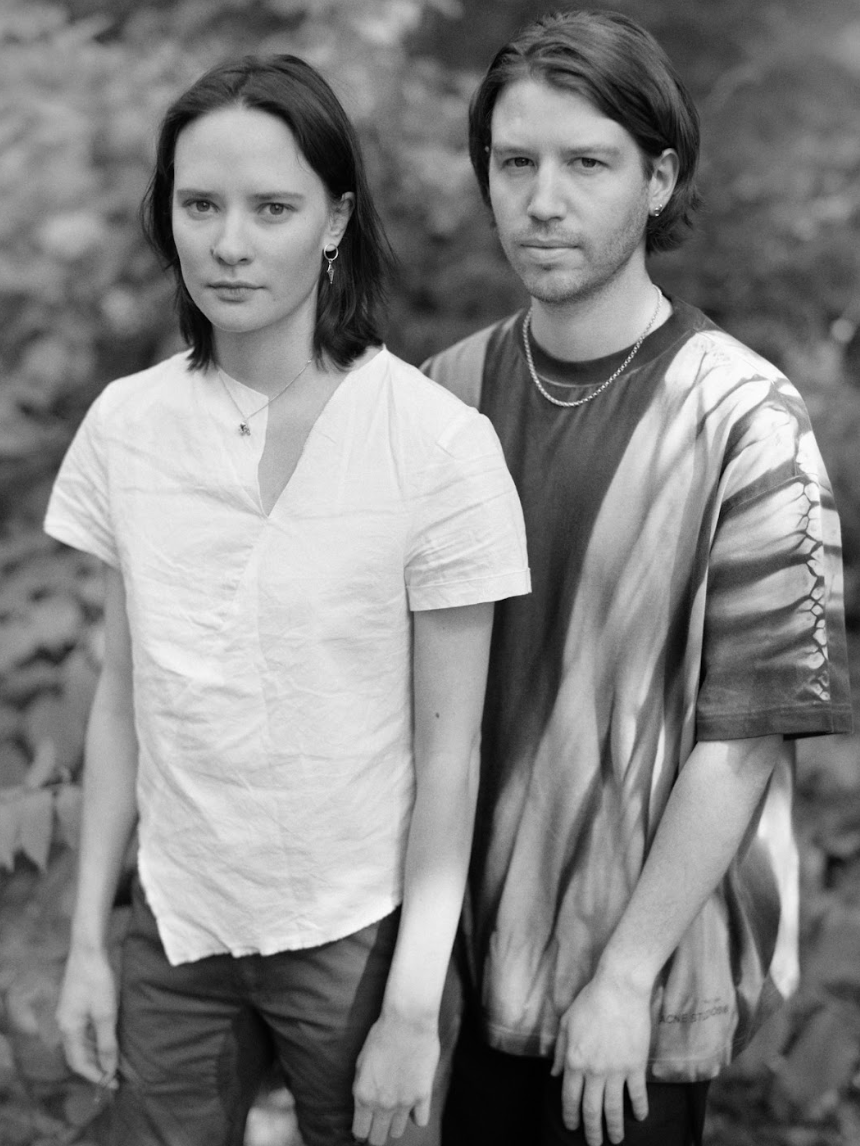
Photo: Juho Huttunen
Biret Haarla Pieski is a choreographer and performance artist from Utsjoki, the Finnish part of Sápmi. Her practices span performance, film, video installation and dance, with works presented at venues including Beursschouwburg Brussels, Kiasma Theater Helsinki, Black Box Oslo and Bergen Kjøtt. Her new group piece Päähenkilö / Oaivámuš premiered in Kiasma Museum’s URB Festival in Helsinki in 2026. She has collaborated with artists from different fields, including Pauliina Feodoroff, Marja Helander, Outi Pieski, Niillas Holmberg, Jakop Janssønn, Hayden Dean and Gáddjá Haarla Pieski, with works presented at venues such as Tanssin Talo Helsinki, Sundance Film Festival, Helsinki Biennale, Munch Museum Oslo, KINDL Berlin and the Venice Biennale. She was awarded the Young Dance Artist Award by the Kuopio Dance Festival in 2024.
Hayden Dean is a British-Irish artist. His work centres on sonic writing, incorporating audio, text, and video to create works that move between performance and installation. By focusing on indirect forms of communication through sound and language, he explores the nuances of interaction and engagement. Alongside his practice, he maintains ongoing collaborations with artists including Aziz Hazara and Biret Haarla Pieski. His artistic research has taken him to collaborate with institutions, including Aalto University in association with the Berlin University of the Arts. His solo and collaborative work has been presented internationally at venues such as ZKM Center for Art and Media, the British Film Institute, Künstlerhaus Bethanien, and the Venice Biennale.