
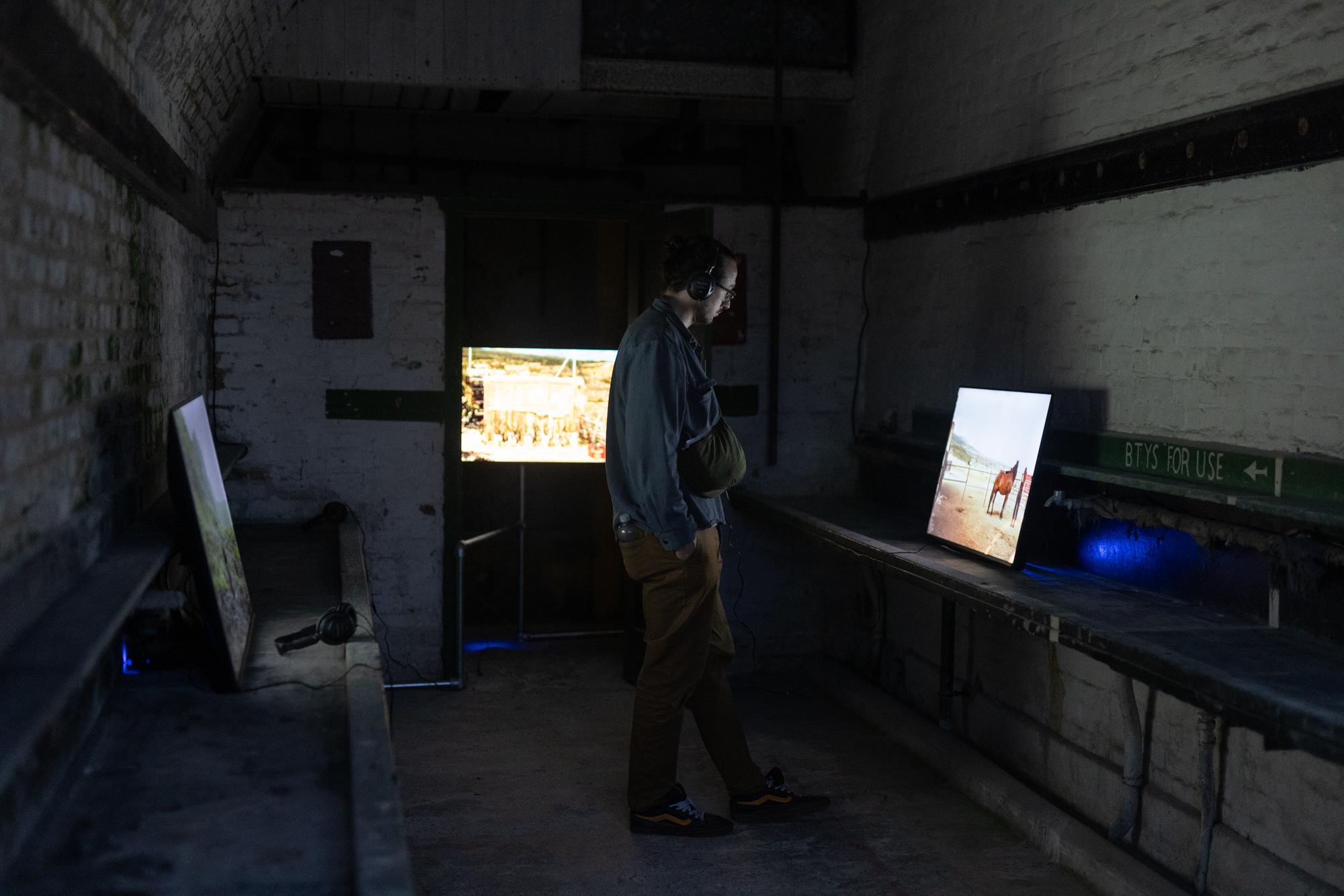
Survival Guide for A Post-Apocalyptic Child at Fort Burgoyne in Dover, UK. Photo: Alex Davies
In 2025, Frame’s grants enabled 129 international projects of Finnish contemporary art around the world. For our annual report, we asked artist Nastja Säde Rönkkö to share experiences on their international presentation supported by Frame grant. During the year, Rönkkö’s exhibition The Survival Guide for a Post-Apocalyptic Child was presented at multiple locations in the UK.
Nastja Säde Rönkkö: The body of work Survival Guide for a Post-Apocalyptic Child was originally produced in collaboration with the Lönnström Art Museum in 2022, and was subsequently featured in a solo exhibition at HAM Helsinki Art Museum in 2024. Its international development stemmed largely from existing networks.
The collaboration in the UK began with an invitation from the English curator Arly Bean. I knew her from my student days in London, but we had never worked together before. Bean had seen the work somewhere and wanted to curate it at the historic Fort Burgoyne, located in Dover. The project grew during our collaboration, and eventually parts of the work and discussion events were organized at several different locations: in addition to the fort, at the Quench contemporary art gallery in Margate, as well as at the Folkestone Triennial and the Prospect Cottage gallery in Kent. Arly Bean was largely responsible for establishing other local contacts and making the project possible in England. We planned the project together for just under two years.
At Fort Burgoyne, the work expanded into a site-specific installation in which video works, sculptures, and a soundscape formed a new version of the original installation. Over the course of just over a year, the process progressed from discussions to production, spatial design, and international collaboration with various curators, producers, and technical professionals.
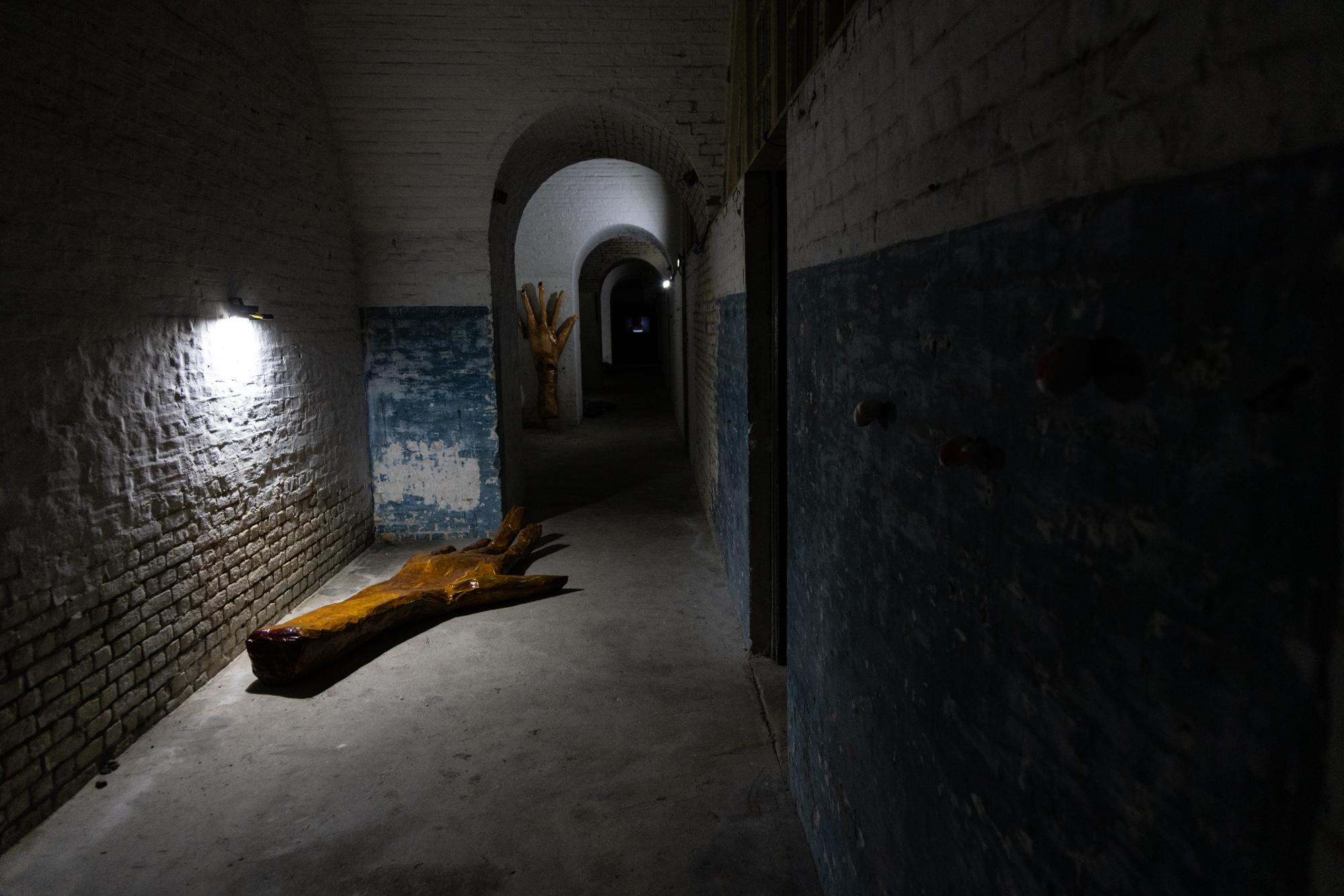
Survival Guide for A Post-Apocalyptic Child at Fort Burgoyne in Dover, UK. Photo: Alex Davies
The grant awarded by Frame played a crucial role in the successful implementation of the project. Building international projects requires a great deal of behind-the-scenes work, travel, networking, production planning, and time. Frame’s support essentially made it possible for me to travel to install the work and attend the opening, as well as to focus on the long-term international presentation of the piece. This project was particularly expensive to realise because it includes 26 videos, a site-specific sound piece, sculptures, a book, and other components. In the field of contemporary art, resources have a decisive impact on how extensively and ambitiously works can be realised. In particular, transportation costs for artworks are currently very high.
I wanted to give the work an international presence and continue my practice, particularly in the UK, where I have studied and lived for a long time. In addition, my goal was to develop site-specific work and see this particular piece in different contexts, such as an old castle or the Prospect Cottage gallery space established in the home of the late artist and activist Derek Jarman. My goals were realised on many levels: the work found new audiences through different venues. It sparked discussion in various settings.
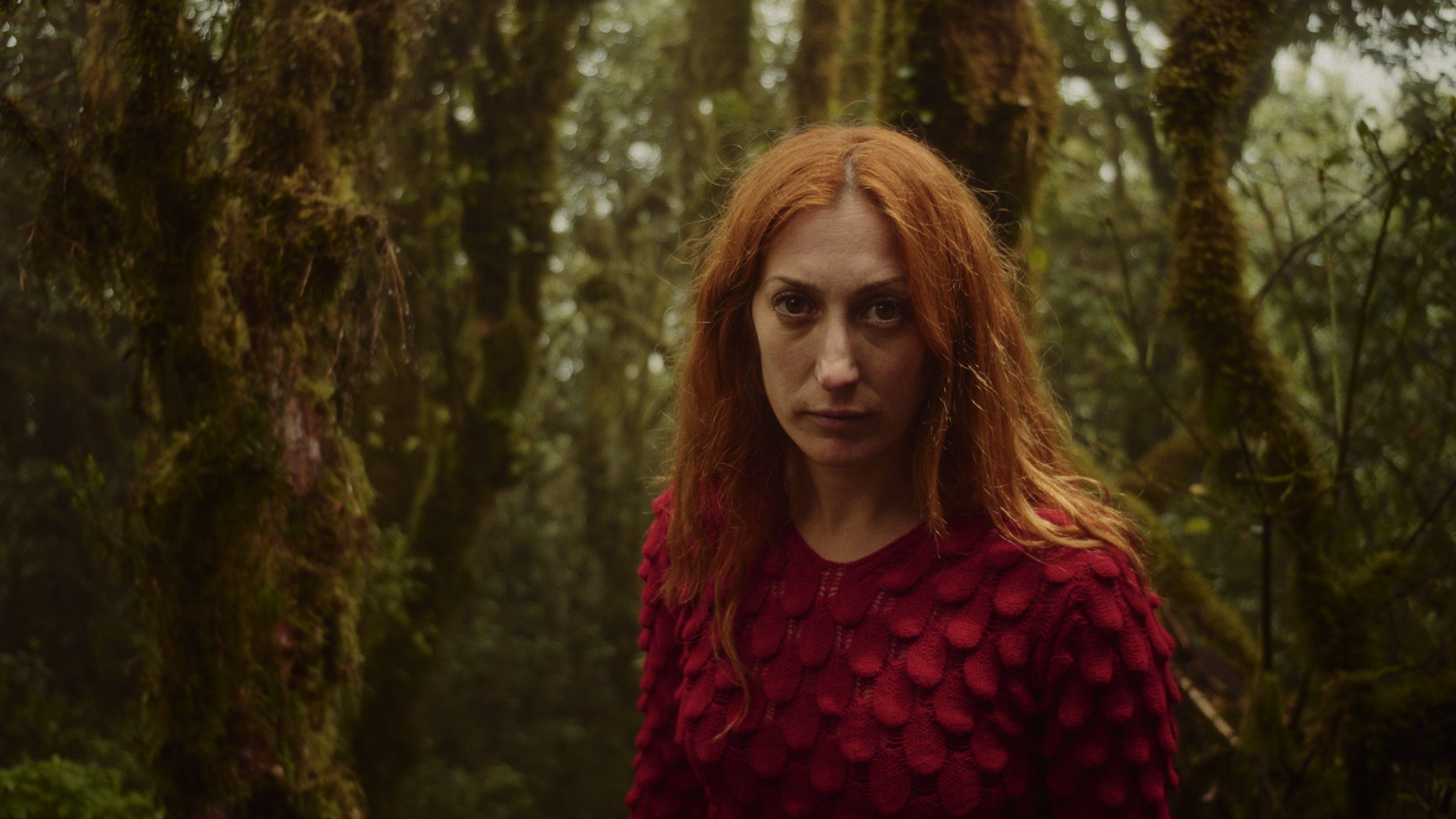
Survival Guide for A Post-Apocalyptic Child. Still photo: Nastja Säde Rönkkö / Aake Kivalo
Many impacts are slow and unmeasurable, but significant in the long run
The project has led to new international contacts and discussions about future opportunities for collaboration. For example, an artist talk and screening event at the Live Art Development Agency in London led to a collaboration with London-based curator Gemma Rolls-Bentley. She became interested in my works and curated them that same fall for a group exhibition at Alice Austen House in New York, and at the Leslie-Lohman Museum of Art, also in New York, earlier this year. I hope that our collaboration will continue in the future.
In the international contemporary art scene, many impacts are slow and difficult to measure, but significant in the long run. Sometimes a smaller event or encounter, such as an artist talk, can lead to new opportunities later on. I feel that this is another reason why it is important to be physically present at events such as openings.
Through exhibitions, I have met curators, producers, artists, and institutions with whom I continue to engage in dialogue. Working in historical settings, such as Fort Burgoyne, has deepened my interest in how a specific place, history, or the imagination of different futures can intersect within an installation.
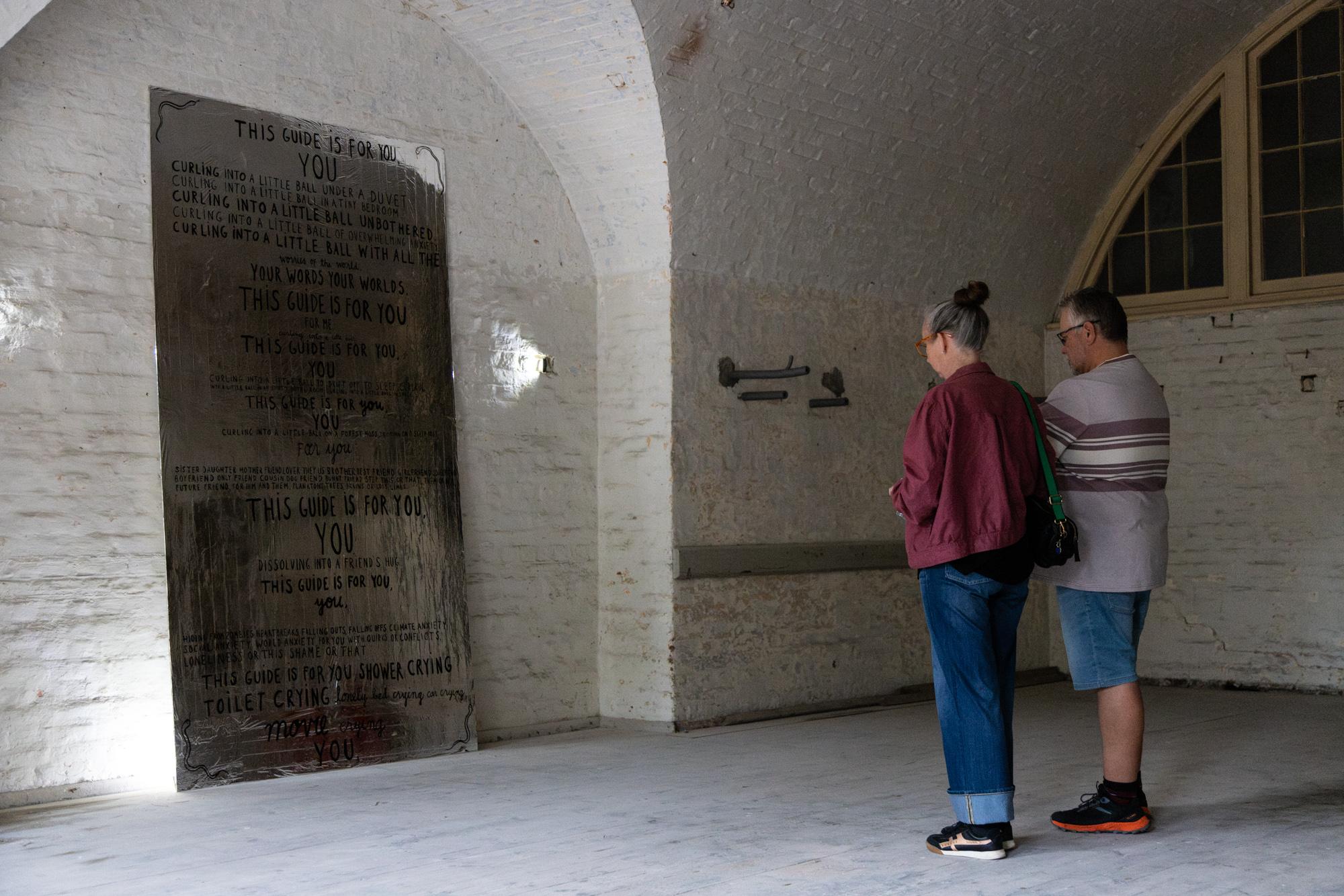
Survival Guide for A Post-Apocalyptic Child at Fort Burgoyne in Dover, UK. Photo: Alex Davies
Dialogue is essential for internationalisation
Contemporary art organisations can support artists’ internationalisation in many different ways. Financial support is, of course, important, but equally significant is the long-term building of networks, for example, through studio visits or other organised encounters. Internationalisation often happens slowly and is based on long-term relationships. Artists benefit from support that enables continuity rather than just individual projects.
In my view, smaller travel grants—even for openings or artist talk events—are also concretely useful. At least in my own case, these have very often led to larger collaborations later on. In Finland, there have been significant cuts to these smaller, fast-cycle grants, which is a bad thing. Often, an invitation to an exhibition or other international opportunity comes on a relatively tight schedule, and there is a great need in the field for grants that can be applied for quickly and with low barriers to entry.
It is also important to maintain an open dialogue between various actors and artists in the art field about the pressures associated with the international art scene and how artists can be supported in a sustainable way in a situation where uncertainty is very common. At least Frame and the Finnish Cultural Foundation have organised such events, and I hope they will continue.
Moving forward, I hope that the international development of my artistic career will continue and that my international collaborations will deepen and expand further. In practice, this has happened through the revitalisation of old connections, such as those formed during my time studying in London. New curatorial collaborations and exhibitions have also created additional opportunities for collaboration.
Working internationally has largely been about building networks: one project leads to the next, and discussions continue with various institutions and curators. Often, an invitation to exhibit or a collaboration has begun with a meeting that may have taken place years earlier.
– Nastja Säde Rönkkö
This blog is a platform for reflecting on work, current issues, and discussions in the arts by Frame staff members and other contributors. This blog post is published in Finnish and in English.
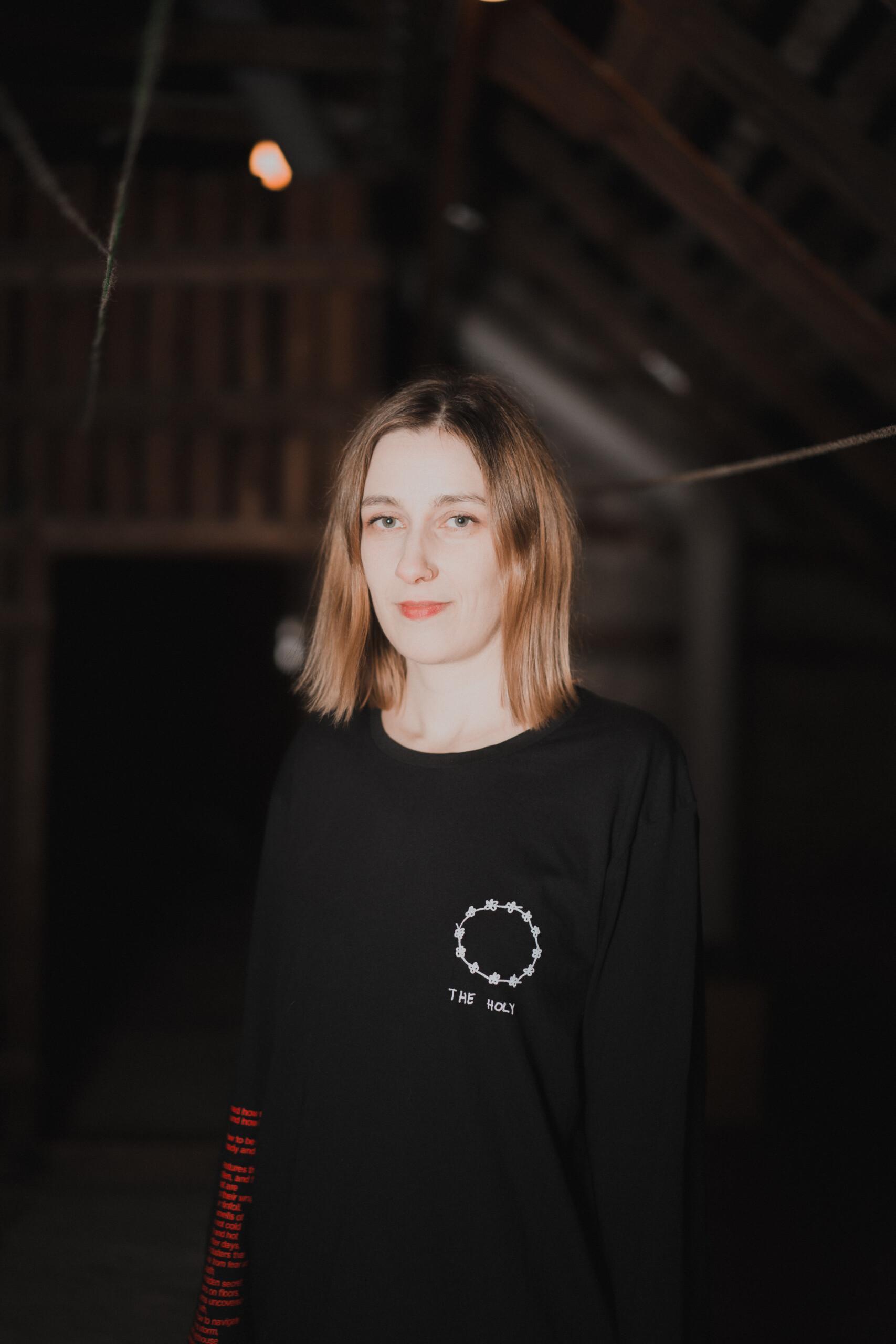
Photo: Vilma Norokorpi
Nastja Säde Rönkkö is an artist working with video, performance, installation and text. Her projects investigate the relationship between the digital era, power, humanity and the future of our planet. She is particularly fascinated with how concepts such as love, slowness or affection can be silent yet radical ways to be and act in the world. Her practice dreams about the future and explores presence through politics and poetics of emotion.