
Pavilions
Finland’s national pavilion at the Venice Biennale is designed by architect Alvar Aalto. In addition, Finland participates in the Nordic Pavilion exhibition together with Norway and Sweden.
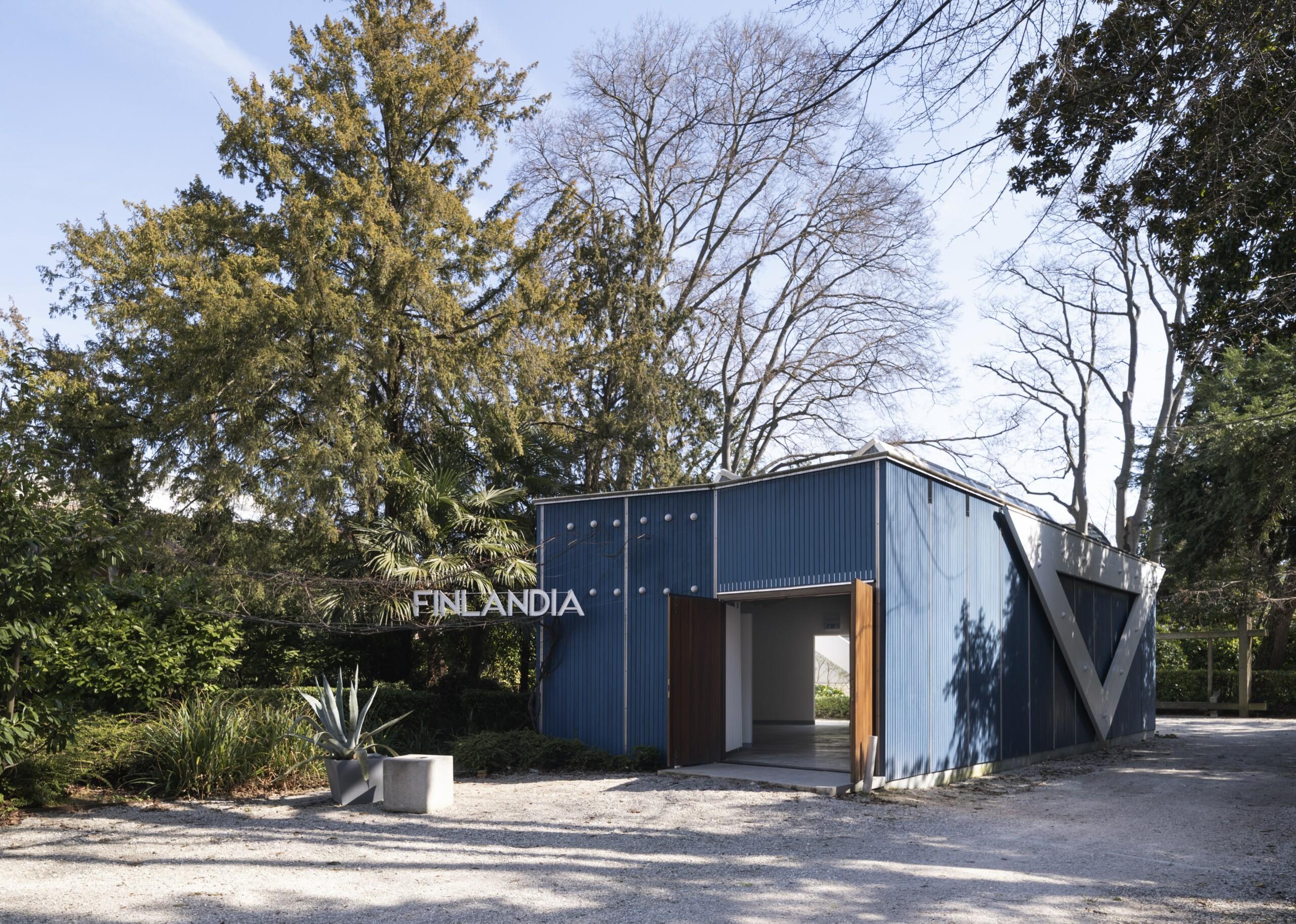
The Pavilion of Finland was designed by renowned Finnish architect Alvar Aalto (1898–1976) in 1956, making it a historically and culturally prestigious pavilion. It is located at the heart of the Giardini della Biennale exhibition venue. In addition to the Venice Art Biennale, the Aalto Pavilion houses Finland’s exhibition at the Architecture Biennale, commissioned by Archinfo.
Pavilion history
Designed at the initiative of Finnish art patron Maire Gullichsen (1907–1990), Alvar Aalto was set to design a small pavilion for Finnish exhibitions at the Venice Biennale. He designed a wedge-shaped structure to be assembled of light-structured, dismountable wall and roof units made in Finland that would be transported to Italy. According to his idea, the pavilion would be easily dismantled and stored between exhibitions or moved to other sites. However, due to some production errors, the pavilion has remained in the same place since the completion of the building in the summer of 1956.
Since the Nordic Pavilion was completed in 1962 up until 2005, the Aalto Pavilion was rented to other countries such as Italy, Argentina, Portugal, and, most recently, Iceland. From 2007, with the support of the Finnish Ministry of Culture, the Aalto Pavilion has again been used as the exhibition space for the Finnish national presentation.
The pavilion was restored in 1976 and in 1993. In 2011, the building was severely damaged after a tree collapsed on top of it. To repair the damage, the building was completely restored. The restoration was executed during the summer of 2012 based on architectural research.
Pictures alongside a blueprint are found from our media bank.
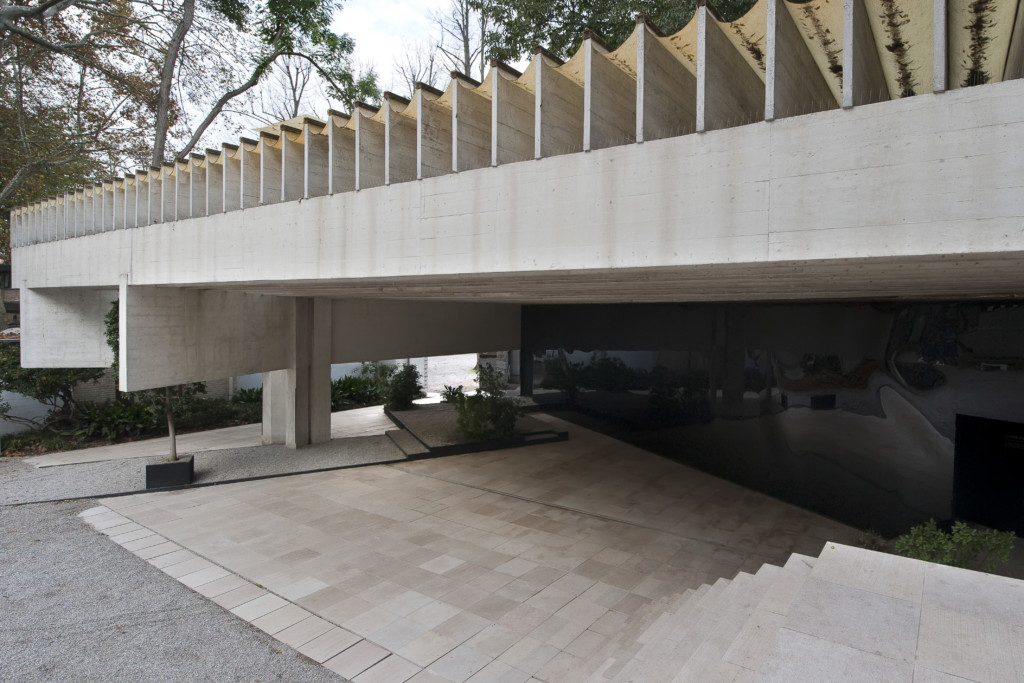
In 1958 Norwegian architect Sverre Fehn (1924–2009) won the competition to design the Nordic Pavilion for the Venice Biennale. Built on a plot between the pavilions of the United States and Denmark, it is situated at the Giardini park in Venice. The building was completed in 1962 and has since been a space for collaboration between three nations – Sweden, Finland, and Norway.
The Nordic Pavilion consists of a large, open exhibition space. The pavilion is built of a concrete beam structure, and two of the walls are made of glass. The building was designed considering the surroundings and nature around it: three trees grow inside the pavilion.
From 1962 to 2009, Finnish artists were exhibited alongside Norway and Sweden at the Nordic Pavilion. During 2011–2015, an exhibition rotation was developed so that each country would have a solo exhibition on its turn. In 2011, the pavilion hosted the Swedish exhibition, in 2013 the Finnish, and in 2015 the Norwegian. Since 2017, the agreement entailing that all three countries are represented on equal terms was resumed.
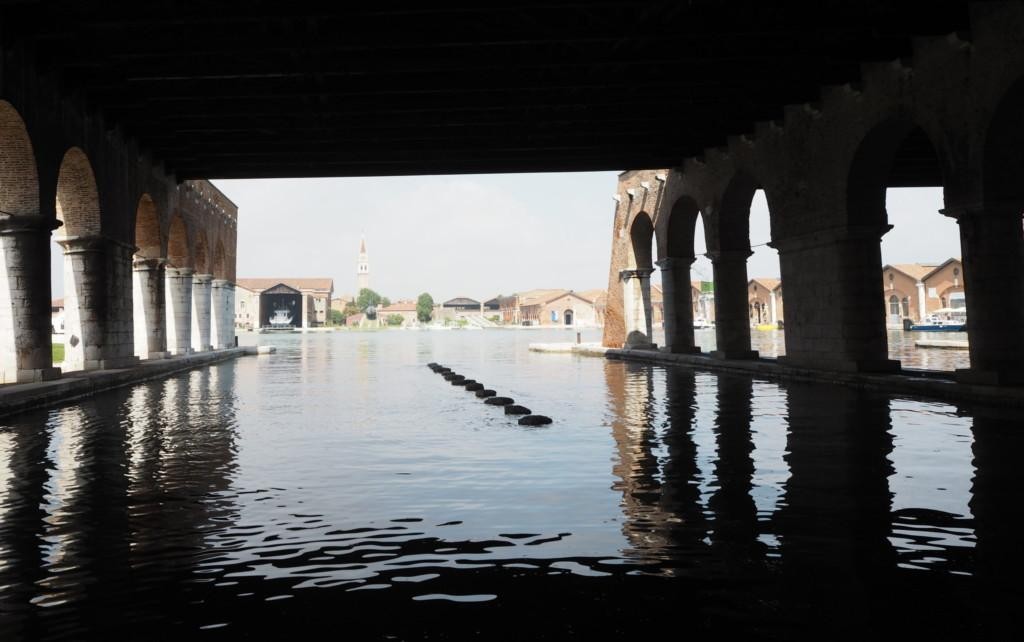
The historic main venue for the Venice Biennale is Giardini di Castello, a park located near the center of Venice. The Giardini houses 29 permanent national pavilions, including the Aalto Pavilion of Finland and the Nordic Pavilion. The Giardini also includes the Central Pavilion, built in 1894, which is the venue for the Biennale’s main exhibition. Since 1980, a former dockyard of Venice, Arsenale, has become the second main exhibition site of the biennale exhibition. In addition to Giardini and Arsenale, the pavilions are spread around the historic center of Venice to different exhibition spaces.